

More Cuba Trip Info

Bee Hummingbird, world’s smallest bird, Photo by Kim Powell
More Trip Information
MEDICAL REQUIREMENTS:
COVID-19 AND FLU PROTOCOL UPDATED OCTOBER 1ST, 2025
In 2023, The Public Health Emergency for COVID-19 declared by the World Health Organization and the US Department of Health and Human Services expired. However, several international outfitters including Blue Water Ventures continued to monitor for COVID-19 before and during our travel programs. As of October 1st, 2025 we offer our latest updates. Guests who choose to test for COVID-19 during our program and test positive will be asked to wear a mask while traveling in vans. They may be asked to isolate during meal time. Their traveling companion sharing a room will also be asked to wear a mask when traveling in group vehicles. Guest who test positive will follow local health protocols in the countries we are visiting. Everyone will be encouraged to wash their hands frequently. Our staff will check in with anyone who appears ill, but we will no longer require Flu or COVid-19 testing before or during a trip.
As always, it will be imperative to avoid contact with people who have cold or flu like symptoms prior to our trip’s departure. Wash hands frequently and be mindful of staying healthy before and during our adventure together. At any time during our program, you may choose to wear a mask. We expect our clients to be accountable for their own well-being and accept the inherent risks associated with group travel. We reserve the right to adjust our Covid-19 and Flu protocol as needed, as new guidance may evolve.
All costs of an evacuation is the responsibility of each participant. Now more than ever, it is important to secure Travel Insurance You may purchase through this link or choose a company of your choice.
Cuba does not require any specific immunizations for entry from the USA. However, The Center For Disease Control has issued a set of recommendations for travel to Cuba. In general, any travelers in developing countries should be up to date on routine vaccines such as measles-mumps-rubella (MMR), diphtheria-tetanus-pertussis(TD or Tdap), varicella (chickenpox), polio, Hepatitis A, Typhoid and your yearly flu shot. Please review the health recommendations for travel to Cuba at the Center for Disease Control Cuba link at: CDC to Cuba (Please note that while the CDC recommends that traveler’s are up to date with their Covid booster, proof of vaccination is currently not required for entry into Cuba).
NEW POST COVID ONLINE FORM: All arriving travelers must fill out an online D’Viajeros form containing information relating to public health and immigration. Click the A symbol on the upper right hand corner for the English version. After filling out your online form you may download it as a PDF or you can take a screen shot of the QR code which will be scanned at the airport by the Cuban authorities. We recommend downloading the PDF and taking a screen shot of the QR code to store on your smart phone. You will be able to fill out the D’viajeros online form 24 hours prior to your departure. However, as this timing changes, we suggest trying 72 hours before your departure. Otherwise, 24 hours before departure.
You’re also required to take out medical insurance that includes cover for COVID-19. This should be included in the cost of your airlines ticket from the US. We suggest that you call your airlines to confirm that medical insurance is covered. Insurance is not included if you are traveling from another country. We also highly recommend getting full travel insurance which can be reviewed here: Travel Insurance
The Zika virus has been reported in Cuba and is transmitted to humans by mosquitoes. More information on the Zika virus may be reviewed at: Zika. Please review this page carefully for Information on Zika and recommendations for prevention during and after our visit to Cuba.
Please visit the CDC for updates and suggestions before you travel. All medical precautions are the decision of each participant. You may also consult a travel clinic that specializes in immunizations and travel updates.
Before our program departs, we will send an email reminding you of the 4 essential items needed for travel: Your Passport (current at least 6 months past your date of arrival into Cuba) Your Visa, The D’Viajeros form and the Certification of Travel that will be sent by email and in your package of information sent to you 6 weeks before our departure. This last form takes just a minute to fill out and you travel with it.
ACCOMMODATIONS: During our visit to Cuba, we plan to stay at “Casas Particulares” which is a phrase for a “private home”, owned and operated by a Cuban rather than the government. Our private home stays will vary at each location, but you will share a room within a comfortable Cuban home on a double occupancy basis. As with a rental home here, living areas will be shared. Throughout Cuba it is recommended to place toilet paper in the waste basket as their septic system is generally more delicate than ours. When traveling carry a roll of toilet paper with you. As we progress through the trip, hold onto Cuban coins to be used in public bathrooms.
After a day of learning and adventure, you make relax in your room or join the group in the communal living area. Casas Particulares operate like our B&B’s and provide a hearty breakfast. Our rental house while in Habana has a more modern design than others. While in Playa Larga our Casa Partiuclar will be simpler than our Habana home stay, but just a few steps away from a beautiful beach. Keeping to our mission of providing truly authentic experiences during our learning adventure, we are excited to meet and converse with our Cuban hosts at each Casa Particular we visit. Double occupancy accommodations provided throughout our Cuban Itinerary.
Locations at a Glance: Day One-Day Two: Habana ~ Day Three -Day Four::Cienfuegos ~ Day Five -Day Six: Trinidad~ Day Seven-Day Eight Playa Larga~ Day Nine: Habana ~ Day Ten: Homeward bound

Sunrise at Playa Larga
PASSPORTS: Everyone is required to have a current passport for entry into Cuba as well as a Visa. Please make sure that your passport is current at least 6 months past your date of arrival into Cuba . In other words, your passport can not expire before August 1st, 2025. We will be contacting you by email regarding your Visa which costs $90-125 to obtain prior to arrival. For passports, It usually takes 6-8 weeks to process. For information on obtaining a passport, please visit: Passports Most post offices provide the service to process US passports.
OBTAINING A VISA AND OTHER LEGAL CONSIDERATIONS: US citizens traveling to Cuba must obtain a Visa and fall into one of the 12 categories of legal travel to Cuba established by OFAC (Office of Foreign Assets Control, Department of Treasury). The 12 categories of permitted travel to Cuba may be reviewed here: Travel to Cuba.Our program falls into the category of Support for the Cuban People which requires that we follow a detailed educational itinerary and we are fully hosted, from beginning to end. Once airfare is ticketed we will send you details on how to obtain a visa. When obtaining a Visa at Visa for Cuba you will be asked to select: one of the 12 categories (select Support for the Cuban People ); Flight Date, Record Locator and Cuba Province, select Havana.
In June, 2017 the Trump Administration ordered a series of changes regarding policies towards travel to Cuba for US citizens. The changes were outlined by the Department of Treasury OFAC division, have been updated and can be reviewed here: OFAC Update
A pertinent change was eliminating individual people to people travel to Cuba. In other words, those individuals who would like to plan their own trip to Cuba, can no longer do so. The Department of Treasury stated “The President instructed Treasury to issue regulations that will end individual people-to-people travel.
You may also review the US Department of State’s Cuba Page for the most current information on travel to Cuba.
Group travel such as our program was not affected by the changes ordered in 2017. The Department of Treasury offered this clarification:
“1. Will group people-to-people travel still be authorized?
Yes. Group people-to-people travel is educational travel not involving academic study pursuant to a degree program that takes place under the auspices of an organization that is subject to U.S. jurisdiction that sponsors such exchanges to promote people-to-people contact. Travelers utilizing this travel authorization must maintain a full-time schedule of educational exchange activities that are intended to enhance contact with the Cuban people, support civil society in Cuba, or promote the Cuban people’s independence from Cuban authorities, and that will result in meaningful interaction between the traveler and individuals in Cuba. An employee, consultant, or agent of the group must accompany each group to ensure that each traveler maintains a full-time schedule of educational exchange activities.”
While we are not anticipating a travel ban to Cuba, a type of Trip Insurance known as Cancel for Any Reason, would protect 75% of your deposits made towards the Cuban program. Please review trip insurance options here: Insurance
KEEPING ALL DOCUMENTS AND RECORDS: The U.S. Treasury Department’s Office of Foreign Assets Control (OFAC) regulations require that travelers maintain clear records of travels throughout Cuba even with a license. Travelers are required to retain possession of these documents for up to 5 years in the unlikely event that the OFAC solicits them. Therefore, keep your Certification of Travel to Cuba form, as well as documents regarding purchases or transactions relating to your Cuba travels, such as your reservation materials, invoices, flight records, etc. as evidence for travel purposes. You will receive a paper receipt from Blue Water Ventures for the cost of your program.
CUBAN SUPPORT SYSTEM From the moment we step off the plane in Cuba until our final farewell, we will be in the expert and professional care of our Cuban facilitators. Roman Cahero, one of our guides has been a trip leader for decades. Roman is a wealth of knowledge, extremely personable, an incredible birder and dedicated to providing a superb Support for the Cuban People Educational Adventure. Among the various activities that support the Cuban People are: meeting with local architect guides in Havana, Trinidad and Cienfuegos, meeting the scientists from Zapata National Park among other activities that may be reviewed in our detailed Itinerary.
MAPS OF CUBA: A variety of maps may be found here Maps of Cuba.
MONEY: Upon arrival to Cuba, all expenses with the exception of personal alcohol, souvenirs and small tips for local musicians are included. The costs of any activities not described in the itinerary such as visiting additional museums, scuba diving or catching a personal taxi are your responsibility. An airport departure tax and the $2.50 per day accident insurance should be been factored into your ticket. US Credit cards or debit cards do not work in Cuba so you will need to bring cash. Upon arrival to Cuba, we can change money near the airport.
Us currency is accepted throughout Cuba. Please plan on bringing $400 in extra cash that you will keep in US currency as an emergency fund. Remember, there are no ATMS in Cuba. Beyond the $400, you will just need cash for your bar bills, souvenirs, etc. . Smaller denominations such as 5’s, 10’s and 20’s are recommended as you will receive the Cuban peso in change. When planning your budget, rum drinks may cost $5-7 US dollars and beers may cost $4-6 US dollars. The amount you bring to Cuba beyond the $400 really depends upon if you drink alcoholic beverages and/or would like to bring back souvenirs. While the US dollar is accepted throughout Cuba, we will make a stop to exchange some US currency into the Cuban peso. Roman will review currency updates with our group upon arrival. While Credit cards are not accepted in Cuba, it is recommended to travel with a credit card en route to Cuba.
TIPPING: The cost of your trip to Cuba includes a $300 tip to our Cuban Guides, tips for our Cuban hosts and drivers, as well as donations to museums and speakers. We do suggest that if you enjoy some local musicians, that you will consider a few dollars as tip to show your appreciation. Please consider a gratuity for your Blue Water Ventures guides who will take good care of your throughout Cuba. $100-$150 per person to be split between your Blue Water Ventures guide would be greatly appreciated. If you have left over Cuban Currency, you may use it as a tip to your BWV guide at the end of the trip.
GENERAL SAFETY: Cuba is considered one of the safest countries to travel in throughout the Western Hemisphere. Cubans are generally very friendly and warm hearted people who welcome Americans and are eager to share and interact with us. As with all travel, we should exercise general precautions. When available, we should use a safety deposit box at homes that provide them. When in public areas, be mindful of money exchanges and avoid pulling out big sums of money. Pick pocketing, though rare may occur as it can anywhere else in the world especially in larger cities, so please keep track of your belongings. Make several copies of your passport/visa and store them in several different locations in your luggage.
CIGARS AND RUM: Currently, US citizens are not permitted to bring back cigars or alcohol from Cuba. Roman will provide our group with updates upon arrival as regulations can change.
LUGGAGE: One large soft duffel bag works well. A medium to large duffel bag is recommended. Duffels that have a rolling option are fine. Gifts such as school supplies and medical supplies can be removed from your luggage. Roman has arranged a contact in Cuba to receive these greatly needed items. Please keep in mind that most liquids, lotions, shampoos and gels are scarce in Cuba. For anyone who plans to bring carry on only, one option is to purchase additional toiletries at your departure airport after you pass through security. TSA size restrictions for liquids and gels apply as usual when traveling to Cuba.
We will be traveling through Cuba on vans which will accommodate our luggage, but please bring just one checked bag and your carry on. As you plan your trip to Cuba, review the luggage restrictions of the airline you are traveling with. As an example, each passenger traveling on American Airlines may check 2 bags with a maximum weight of 50-70 pounds per bag, plus 1 carry-on bag and 1 personal item depending upon your class of service. American Airlines may charge $200 for the second bag depending upon your class of service. For those traveling on American Airlines, baggage restrictions can be reviewed here: checked luggage and carry on. It’s always a good idea to review to see if there are any changes in airline restrictions. The total size of your carry-on, including the handles and wheels, cannot exceed 22 x 14 x 9 inches (56 x 36 x 23 cm) and must fit in the sizer at the airport. You may also carry on a personal item such as a purse or laptop which must fit under the seat in front of you. One suggestion is to carry on most of your trip essentials and check a bag with donations, gifts and non essential items.
Please review the next heading regarding Gifts. If you would like to bring donated items, we encourage you to do so. Upon arrival to Cuba, we will give your donations to Roman and they will be distributed to areas of need. Consider keeping some small gifts with you to give to special people you meet along the way. Thank you for your generosity.

GIFTS AND DONATIONS: People often inquire about bringing gifts for our hosts, guides, or teachers we meet along the way. Most Cuban families have very little so small gifts are always appreciated. Even simple items such as toothpaste, shampoo, lotions, sunscreen or razors are in great demand. A small set of tools would be an appreciated gift. If you would like to donate some of your clothing at the end of the trip, our Cuban guides will make sure it finds a good home. Used clothing and shoes are fine.
Other gift ideas include: school supplies (crayons, pencils, construction paper, maps. water color paints, rulers, erasers, glue, etc. If you have a functional laptop or Ipad that you would like to donate to a teacher for use during the school year that would be appreciated. If you only have room for one category of items, school supplies are extremely limited and are greatly appreciated. We will discuss this while traveling together, but please refrain from giving gifts to children we meet along the way as this may lead to conflict among their peers.
Medical supplies such as bandaids, gauze pads, ointments, medical tape, etc. and over the counter first aid supplies such as advil, aspirin, benedryl, etc. are in great demand. Sporting goods items such as a deflated soccer ball with pump or fishing gear are other gift ideas. Inflatable Solar lanterns are light weight and extremely useful items.
LANGUAGE : A very enriching part of our Support fort the Cuban People program is conversing with the wonderful people we meet along the way. Very few people speak English and they greatly appreciate our efforts to converse in their language. You might want to consider brushing up on your Spanish skills or taking a basic conversational course before we depart.
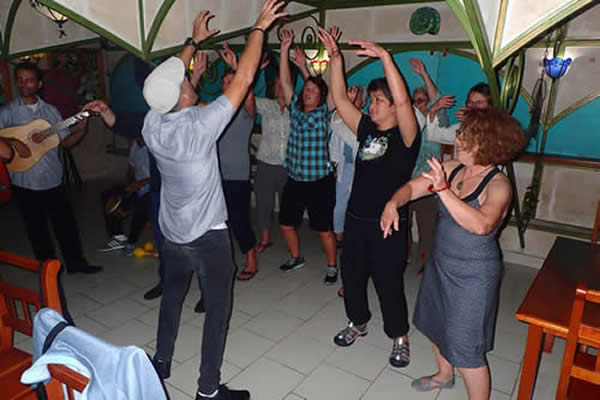
Photo By Kim Powell
CUBAN MUSIC: From our first day in Cuba to our last, you will learn that Cubans love to dance! Music and dance are an integral part of the rich Cuban culture. While we will offer Salsa dance lessons, our advise is: Don’t be shy and get up and dance!
LOCAL CUISINE: An intricate component of our cultural experience will be enjoying the flavors of Cuban cuisine. We will enjoy some seafood, chicken, beef, rice and beans, ground provisions such as yams, organic vegetables and local fruit. Vegetarian meals can be easily arranged upon request. Please keep in mind that service in restaurants may be slow and choices may be limited. Economies based on socialism will not present the same standards of service and food choices that western societies are accustomed to.
During meal times, please sit back and enjoy each other’s company, be patient, appreciative and flexible. Be sure to specify any dietary restrictions or allergies on the registration form that will be sent to you.
PERSONAL SNACKS: Cuba has very limited western style snacks such as power bars, nut mixes, beef jerky, candy, etc. Keep in mind that most types of chocolate will melt while we are traveling in Cuba and is not recommended. Gluten free breads and crackers will not be available, so please bring such items to supplement your meals if needed.
DRINKING WATER: It is best to purchase purified water while traveling in Cuba with both flat and sparkling water available. The restaurants we visit will serve purified drinking water and ice. Both are fine to consume. Tap water for brushing your teeth is acceptable, but you may play it safe and use only bottled water.
CLIMATE: Cuba enjoys a tropical climate with the Tropic of Cancer passing through the northern region. January is typically a mild, sunny month and a relatively dry time of year. January is known for pleasant temperatures averaging around 78-79 degrees with slight variation from year to year and at different locations around the archipelago of islands. Despite the drier time of year, good rain gear is suggested to protect from rain or windy conditions. Down pours are always a possibility in tropical regions. Bring a waterproof sun block/lip balm with a protection factor of 20 or higher. Water temperature in January averages a pleasant 78-79 degrees, only slightly cooler than summer months.
CLOTHING: Loose fitting cotton or quick drying nylon work well in the tropics. Lighter colors seem more comfortable in warmer climates. Some restaurants have AC and may actually be cool so layering is suggested, while other restaurant may be quite humid as they lack AC. Jeans take too long to dry out and are not recommended. Laundry is done by hand as needed by each participant. We may also ask our various hosts to help us with laundry for a small fee.
APPROPRIATE DRESS: Unlike several of our Blue Water destinations where we ask for some conservative attire, the dress code is causal throughout Cuba with no real restrictions. We will be dining out at restaurants for our meals so causal comfortable attire is our primary recommendation.
FOOT WEAR: A light weight hiking shoe or sturdy tennis shoe with good tread is required for a few of our spectacular hiking destinations. During hikes, we may encounter sharp rocks on the trail and some rough terrain so Keens or other sandals may not be permitted. However, Keens or other sport sandals are great for beach time and around town. We also recommend a pair of flip flops.

Photo By Kim Powell
PHYSICAL CONDITIONING: While experience in snorkeling or hiking is not required to participate in this program, good general health is recommended. Few elevators exists in Cuba. You will need to be able to climb 3 sets of stairs daily as our meals are often served on roof top terraces. Your room at a Casa Particulare may also be on the 3rd floor. Some stairs are narrow and steep. While hiking or sight seeing, we may cover 4-5 miles daily, so we highly suggest that you condition for Cuba. Our cave or waterfall hikes often require climbing steep stairs to access these spectacular locations although these activities are optional. People with weak or injured knees should not join is in Cuba. Our guides will offer a variety of excursions each day for those who want to keep active. Some level of upper body conditioning is advisable to prepare for snorkeling.
SNORKELING AND GEAR: Please plan on bringing your own mask, snorkel and fins as such gear is not available to rent in most parts of Cuba. Your naturalist guides are avid snorkelers eager to share information about reef ecology and fish behavior. In addition to our People to People Exchange lectures, we will offer informal talks and guided snorkeling excursions. We hope you will join us in the water as we explore and interpret this amazing ecosystem. We hope to offer a night snorkel for those who wish to experience the creatures of the Caribbean sea at night! If you have a waterproof dive light, please bring it along or we will share ours.
Please test out new gear prior to arrival. If you have purchased a new mask, you will need to clean it at home and then test it. Repeat cleaning until it is fog free. Instructions may be reviewed here Cleaning your Mask. If you are using new fins, try them out! Some fins which have a back heel strap will fit more comfortably with a wetsuit booty or wetsuit sock. Fins that lack the back strap usually don’t require a booty or sock. A visit to a local dive shop will help answer your questions on snorkeling gear.
January water temperature averages around 78-79 degrees which most people find comfortable without a wetsuit. You may also consider bringing a shorty wetsuit or wetsuit top. This is a personal choice. For comparison, Oahu’s Wakiki Beaches averages 76 degrees from January to April and 80-81 degrees mid summer.
IMPORTANT UPDATES ON SNORKEL GEAR: A few years ago, learned about the potential dangers in full face masks. Apparently, in some models CO2 builds up inside the mask leading to blackouts, potentially fatal. Here are just a few articles regarding the dangers of full face masks. With that said, Blue Water Ventures is banning the use of full face masks while we snorkel in Cuba and on all of our snorkeling programs. In Cuba,. we use fins as we enjoy long snorkels. You may argue that you did your own research and purchased the top of the line full face mask. However, we can not assume this risk nor ask our guides to shadow anyone in the water who chooses to wear a full face mask. Full face masks can not be used.
INSECT REPELLENT: A few mosquitoes and sand gnats will be encountered in Cuba. Avon Skin so Soft is the best defense against sand gnats found in coastal areas and your Blue Water Ventures guide will have some SOS handy or you may bring your own supply. In recent years many of our clients have been quite happy with Lemon Eucalyptus by Repel as an alternative to DEET. A layer of lightweight, light in color clothing is an effective defense against insects. The skies are not black with insects. However, if you can’t tolerate insect bites, a trip to the tropics is not for you!
ELECTRICAL OUTLETS: Throughout Cuba, you will find both 110 and 220 volt electrical outlets. We will check in with each house owner to identify which plugs are the standard US 110 outlet for recharging digital cameras, cell phones or other appliances. Several digital camera batteries and extra memory are recommended while traveling. Typically the outlets by the AC at each home are 220 and ones further from the AC are 110, however, always ask when in doubt. We recommend that you travel with a Universal Adaptor plug
WIFI: Internet connections are slow and may not be available at all of our accommodations or destinations. Phone apps such as Facetime, Messenger and WhatsApp should work when WIFI is available. Be prepared to unplug for many days while in Cuba. When internet connection is available at cafes offering WIFI, you may need to pay a small fee. When we have Wifi connection, one of the apps such as Facetime, Messenger or WhatsApp should work for calls back home.
CELL PHONE: As you depart the United States, be sure to put your cell phones on airplane mode to avoid extremely steep roaming charges. Most US phone do not work in Cuba even if you have an international plan. You may double check with your provider before departure. While exploring city destinations, if you need to get in touch with Roman, you may ask to borrow a cell phone. Cubans are very kind and helpful to tourist asking for directions or cell phone use. Tell them you want to make a collect call using the 99 code and you will easily get through to Roman. We will send you Roman’s local number before you arrive to Cuba.
HOW TO REACH OUR GROUP: Before we depart, we will send you a final email with more information on how family members may reach us in the event of an emergency back home. Family members may reach our group by calling our guide, Roman Cahero. Roman’s Whats App Number is: + 52 612 134 9153. You may also try his local Cuban number that we will send you.
ILLEGAL DRUG USE AND OTHER OFFENSES: The Cuban government has very severe penalties for the use of illegal drugs. Do not bring illegal substances into Cuba or purchase/use them during this program. Products containing CBD oils or THC are illegal in Cuba and should not be brought through customs. This warning includes sleep aid gummies and vap oils that might contain even a trace of CBD or THC. If you are found with such items, you may be extending your stay in Cuba for up to 15 years of prison time.
Additionally, it is against the law to photograph military personnel, military installments, airport, harbor or rail facilities. Illegal activities may be reviewed here: Cuba Law and select Local Law and Special Circumstances.
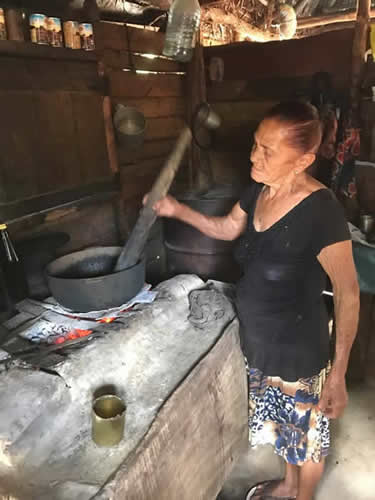

Photo by Roman Cahero

Check Our Reviews On Yelp

Blue Water Ventures
Naturalist-led field trips and adventures. We specialize in sea kayaking field trips for schools and adventures for women in the Monterey Bay, Baja, Belize, Tonga and beyond.
